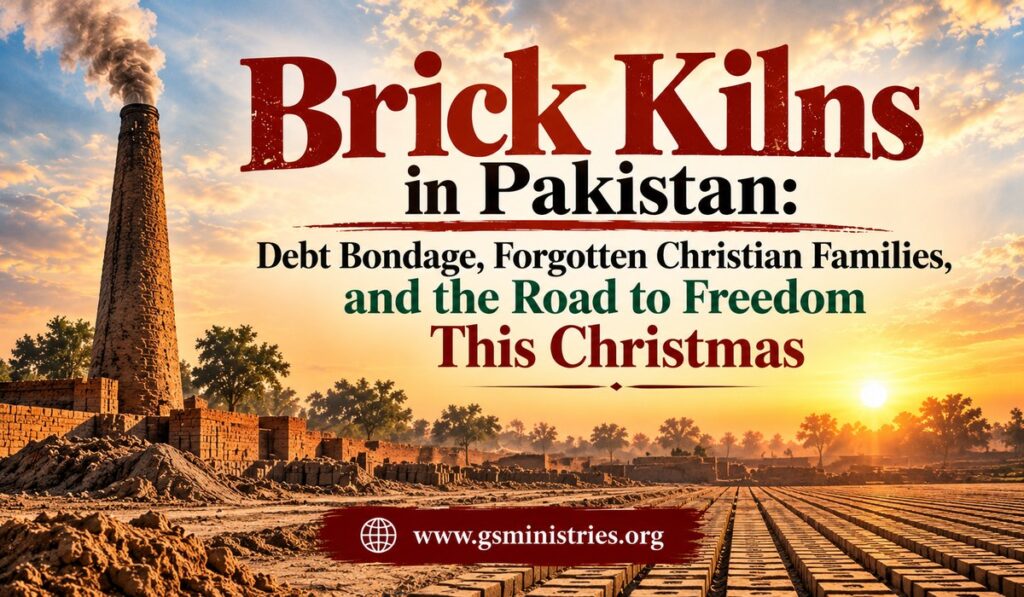
Brick Kilns in Pakistan · By Rev. Dr. Naeem Nasir, Founding President, Good Samaritan Ministries · October 2026
How a small advance becomes a generational prison for brick kiln families in Punjab, Pakistan, and how Christian businesses, churches and individuals can partner with Good Samaritan Ministries to set families free.
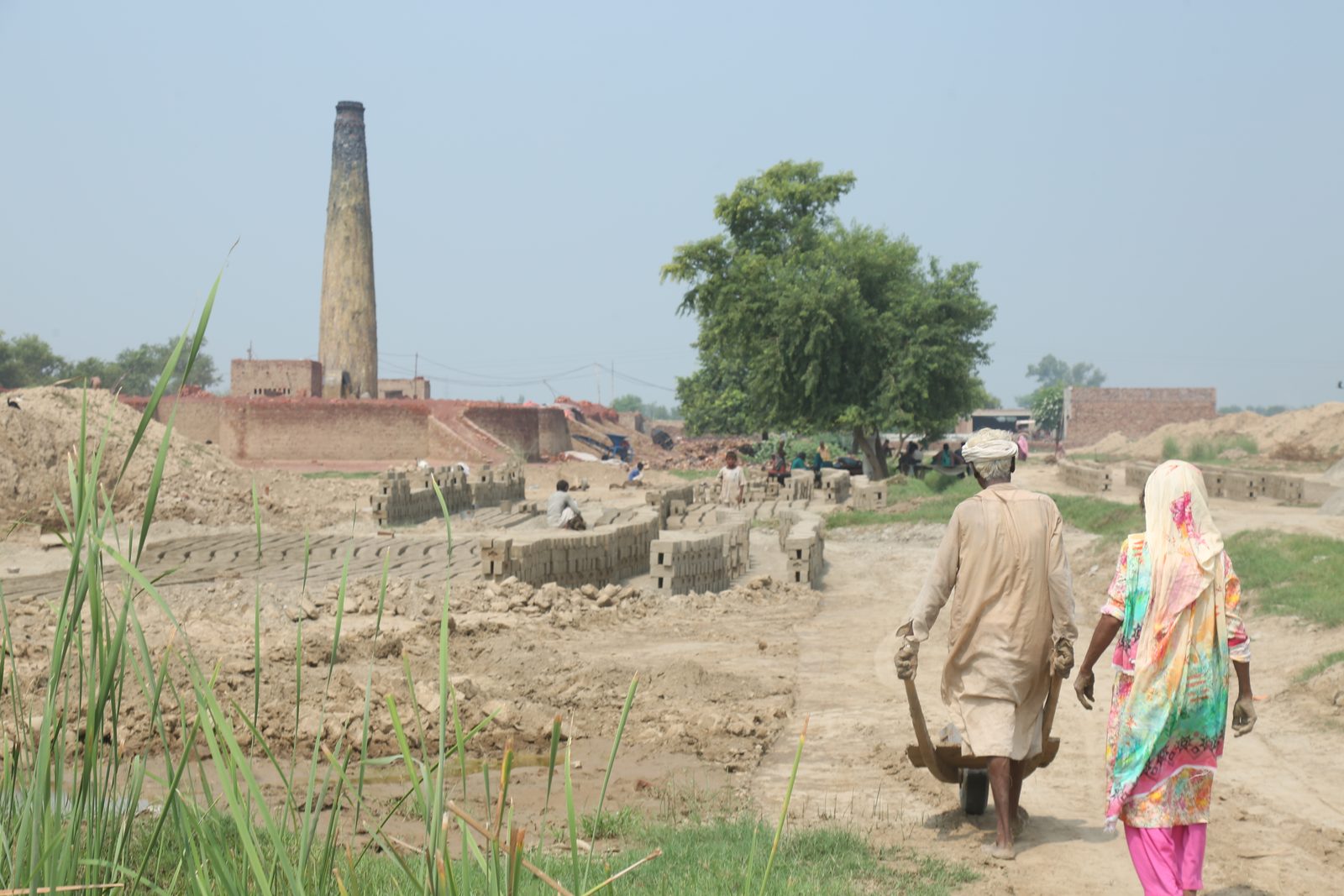
Drive out of any town in Punjab, Pakistan and within half an hour you will see them: tall, tapering chimneys, smoking from October to June, with rows of grey bricks drying in the sun beside them. Pakistan has more than twenty thousand brick kilns. The Punjab labour department alone has registered over ten thousand. Around them, by the figure most often cited by the ILO and the Pakistani press, about 4.5 million people live and work, counting whole families. Twenty to sixty families per kiln, every member working, including the children.
This article is about how a family ends up there, why it cannot leave, and how a family walks out free. It ends with a request.
How it begins
Nobody chooses a kiln. A family arrives because it needs money today and has nowhere else to get it.
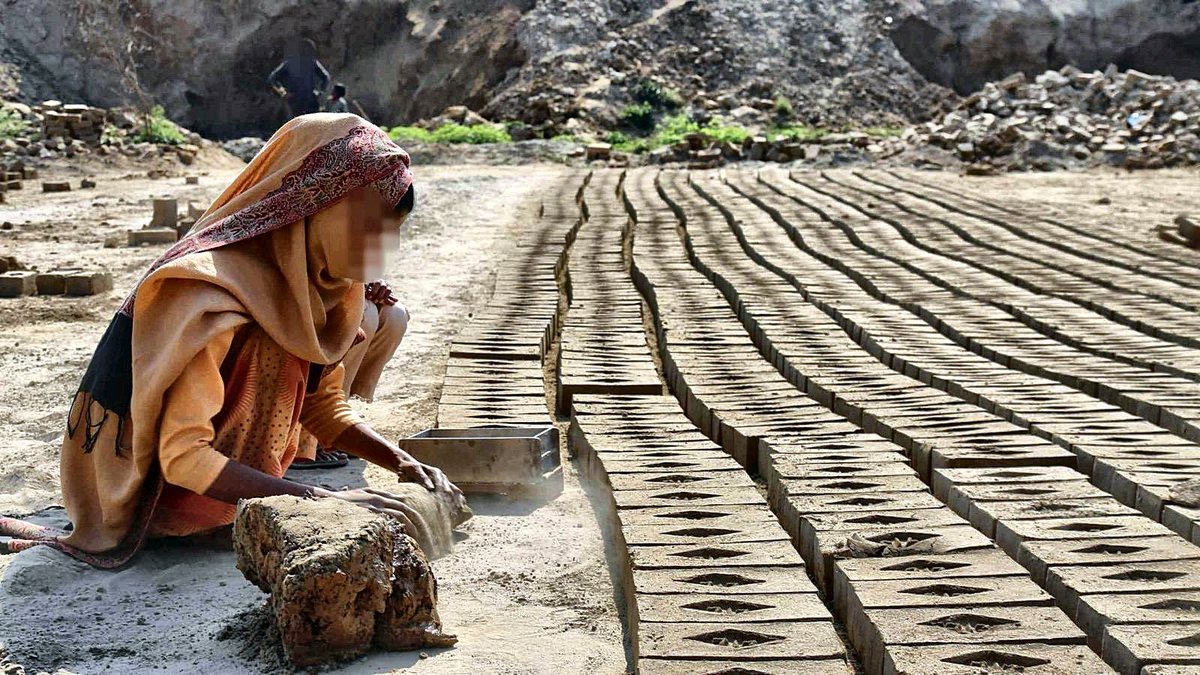
A daughter is to be married, and in our culture a wedding cannot be refused or held cheaply. A mother is in hospital. A father has broken his leg. The rains have come and there is no flour in the house. The kiln owner gives the family an advance, the peshgi: Rs 30,000, Rs 50,000, sometimes Rs 100,000. The family moves into a mud hut on the kiln’s land and begins moulding bricks to pay it back.
It sounds like a job. It is a door that closes behind them.
Why they cannot leave
A brick-moulding family is not paid by the day. It is paid by the thousand raw bricks it produces. The Punjab government has notified a rate above Rs 1,500 per thousand, and families report receiving less. From the counted figure the clerk first deducts rent for the hut, credit at the kiln shop, fines for bricks broken by rain or a stack that fell, and the instalment on the advance. What remains is often not enough to eat on.
A family of five working from before dawn produces perhaps Rs 1,500 worth of bricks a day before deductions. Even an honest ledger would take years to clear. In the off season, when the rains stop the work, there are no bricks and no pay, so the family takes another advance to eat. The ledger that said Rs 50,000 now says Rs 120,000. Nothing is written for the family. The only record is the owner’s book.
In the case files of our team the debt that holds a family is usually between Rs 100,000 and Rs 500,000, about a thousand US dollars on average. Some are far smaller. A couple in their fifties, twenty-five years at a kiln, were held by Rs 110,000, less than four hundred dollars. A quarter of a century of two people’s labour, for less than the price of a second-hand motorcycle.
The sad arithmetic of illness
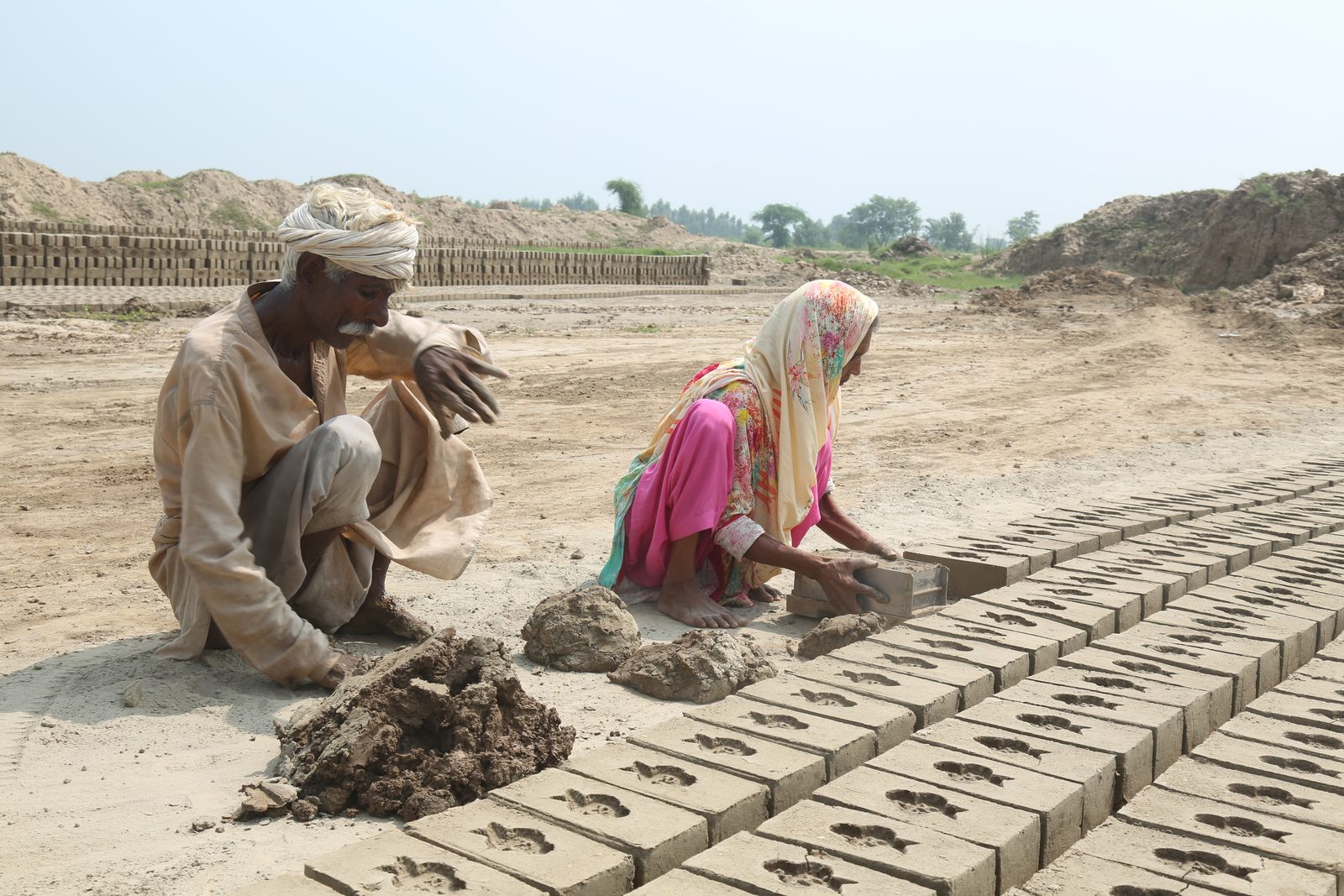
At a kiln, sickness has its own arithmetic. The work is heat, smoke, dust and clay from childhood. Chronic cough and chest disease are so common that families treat them as part of the job. A child’s fever means a day’s bricks lost. A hospital means a new advance.
So families do not seek treatment until it is too late. When a father can no longer mould, the clerk writes the son’s name at the top of the page. One person’s illness becomes the whole family’s bondage, and the healing of one is paid for by the slavery of all. Children are born on the kiln, grow up on the kiln and inherit the page. Thirty years on, the debt is still there, and the person who took the first loan is in the grave.
Children with no school and no hope
Pakistan banned child labour at kilns in 2016 and tied kiln registration to school enrolment. The law is good. The arithmetic of the ledger defeats it. A child at school is, in the owner’s book, a third of the day’s food gone. A government school cannot enrol a child without papers, and a kiln family has neither the day off nor the fare to reach the registration office. The nearest school may be an hour’s walk along a main road. There is no homework, because there is no school.
A child who cannot read will sign the same ledger his father signed. That is how a loan becomes a generational prison.
Why so many of these families are Christian
Christians are about 1.5 to 2 per cent of Pakistan’s population, but they are heavily over-represented in the brick kilns, in sanitation and in other low-paid, hereditary work. Most of the families our team meets at the kilns are believers. They pray. They sing on Sunday in a hut with a cross drawn on the wall. They have not lost their faith. They have lost every other door.
What freedom actually looks like
Good Samaritan Ministries has been freeing brick-kiln families in Punjab for years, and every rescue follows the same rules, because the first families taught us what goes wrong when any step is skipped.
- The debt is paid in full, in cash, in front of two witnesses and the family. On 11 September 2024 our team paid one family’s debt this way and the owner signed. There is no negotiation afterwards, and no second claim.
- The release names every member of the family. A release for the father alone leaves the wife and children in bondage. The family keeps a copy, we keep a copy, and the signing is photographed.
- The family moves the same day to a rented room away from the kiln, with the first month’s rent and food paid.
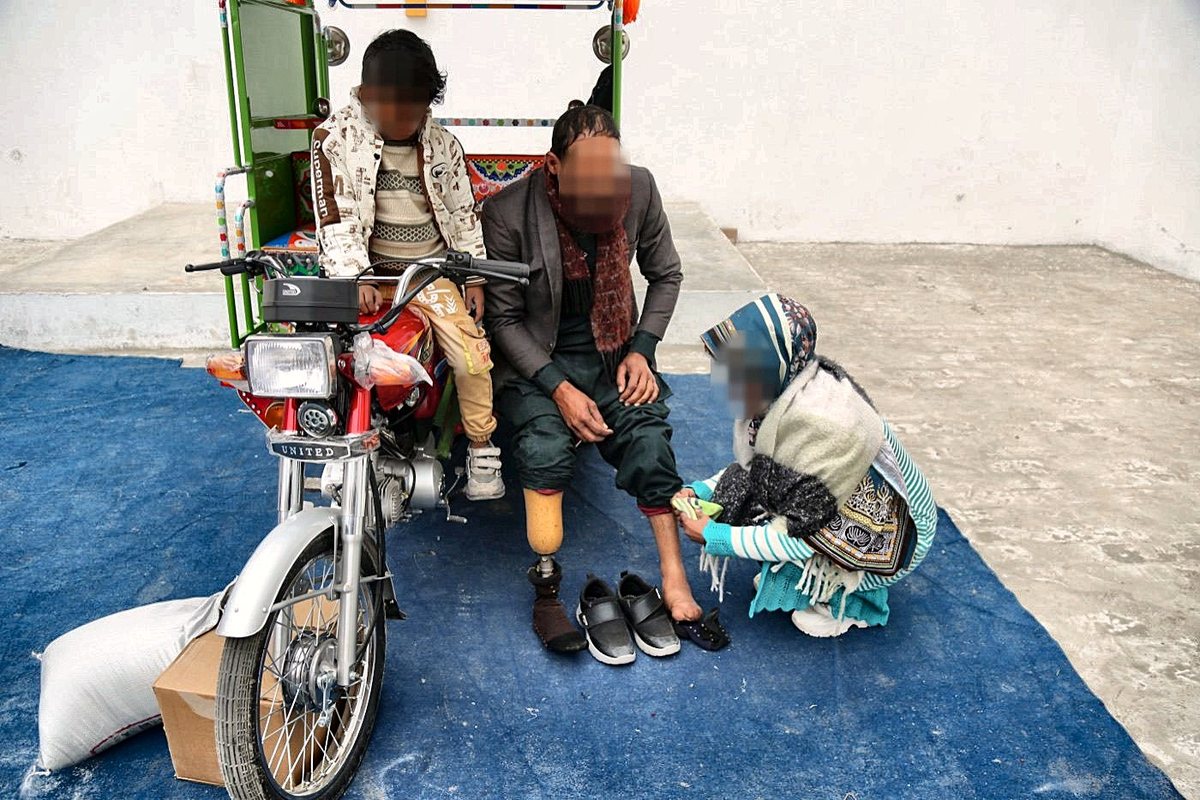
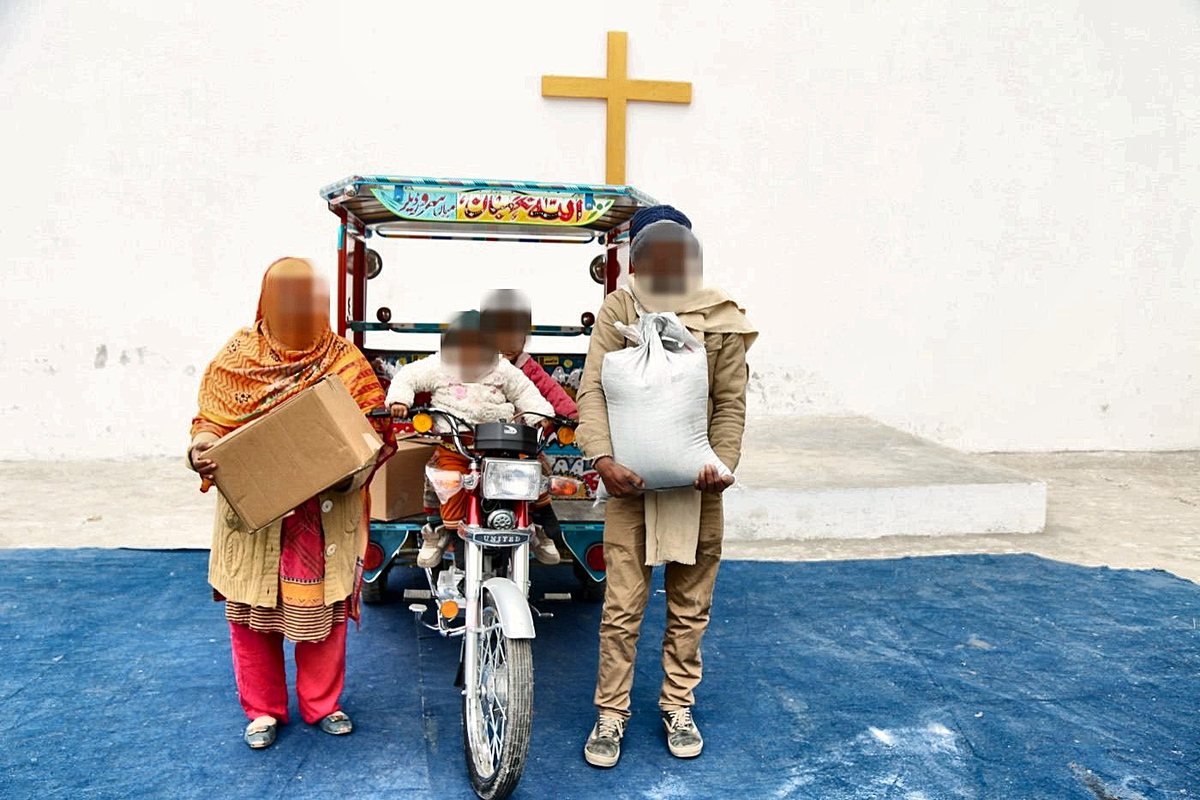
- The family receives an income within a week: a motorcycle rickshaw for a father or a grown son, a sewing machine and training for a mother, a small shop or a trade. Something that earns from the first week, so the family never needs an advance again. A rickshaw is the most expensive gift and the most effective.
- The children’s papers are applied for in the first month and the school admission follows. A child in school is the surest sign that a family will not go back.
- The team visits every month for a year: rent, school, medical care, identity documents, and a church family that knows them by name.
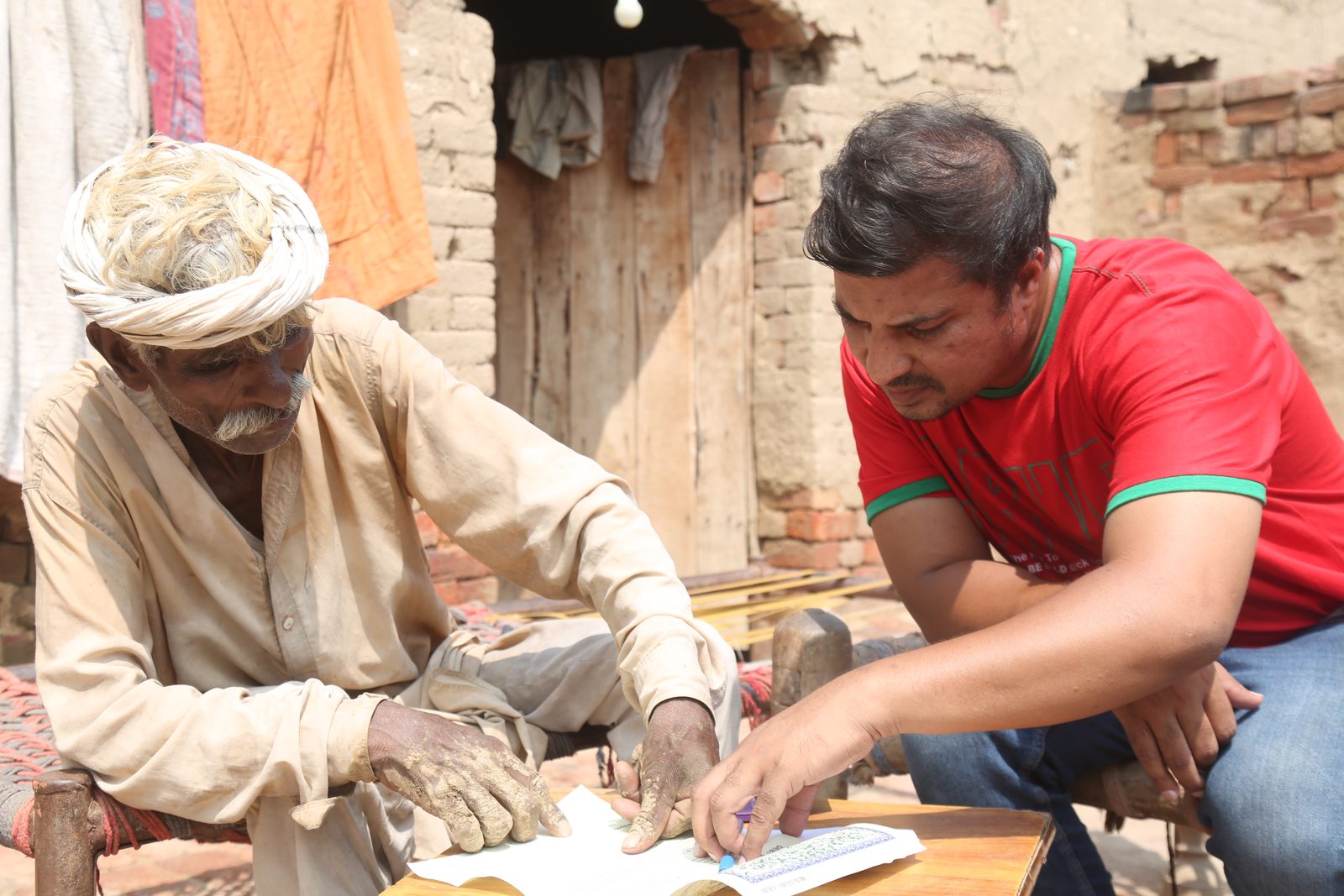
Shahbaz and his family spent years making bricks against a debt that only grew. Today he runs a motorcycle rickshaw between his village and the market, stop to stop, and brings home an honest income every evening. His children are in school. That is what a thousand dollars and a year of faithfulness look like.
This Christmas we want to go further
We have freed many families. The waiting list is longer than the families we have freed. This Christmas we want to expand the goal, and we cannot do it alone.
We are asking Christian businesses around the world, churches, Christian organisations and individuals to partner with Good Samaritan Ministries in one of these ways:
- Free a family. The average debt in our case files is about 1,000 US dollars, some a few hundred, a few more. You receive the family’s story and the photograph of the signing, with faces protected.
- Give a rickshaw or a trade. A motorcycle rickshaw, a sewing machine with training, or a small shop, so a freed family earns from the first week.
- Keep a child in school. A school year of fees, uniform and books keeps one child out of the kiln for good.
- Feed a family this Christmas. A 32 kg food package, enough for about two weeks, with a new Urdu Bible, delivered to a kiln family: 35 US dollars per family.
- Adopt the follow-up year. Rent, school and medical costs for a freed family through their first twelve months.
A business can sponsor ten families as its Christmas giving. A church can free one family as a congregation and follow the story through the year. A Sunday school can keep one child in school. An individual can give a rickshaw.
Every rescue is documented: the debt paid, the release signed before witnesses, the move, the income gift and the follow-up visits. You see exactly where your gift goes and whose life it changed.
“He has sent me to proclaim freedom for the prisoners and release for the oppressed.” The One who said this in Nazareth still says it over the chimneys of Punjab. This Christmas, be part of the answer.
Partner with us: https://www.gsministries.org/donation/
Photographs are of real kilns and real families in Punjab. Faces are protected; kilns, owners and villages are never named. Figures quoted are published estimates from the ILO, Pakistani labour departments and the press, or our own team’s case files, and are stated as such.
Partner with Good Samaritan Ministries
Free a family, give a rickshaw, keep a child in school, or feed a kiln family at Christmas. Every rescue is documented: the debt paid before witnesses, the move, the income gift and a year of follow-up.