Christians in Pakistan · By Rev. Dr. Naeem Nasir, Founding President, Good Samaritan Ministries · October 2026
Whenever people ask about the church in Pakistan, they expect a story of suffering. There is suffering, and we will not hide it. But that is not where the story begins, and it is not where it ends. The story begins almost two thousand years ago, and it ends with a promise that no mob has ever been able to burn.
A faith older than the country
Christianity did not arrive in this land with the British. The oldest tradition of the Eastern church says that the apostle Thomas came east after the resurrection, around the year AD 52, and preached in the kingdom of Gondophares, whose capital stood at Taxila, a few miles from today’s Islamabad. Coins bearing that king’s name have been dug from the soil of Punjab.
I have stood on that ground myself. At Taxila the guide told me the story the way it has been handed down there for generations. Thomas, a carpenter by trade, was brought to the king to build him a palace. The king left on a journey and Thomas was given the money for the work. But instead of raising a palace he began preaching about the Kingdom of God, and the money went to the poor. When the king returned he asked, “Where is my palace?” Thomas answered, “It is in heaven. I cannot build it here. Every time the walls are raised, they fall down.” That night, the story goes, the king saw a dream. He saw his house, finished and shining, in heaven. The next morning he came to Thomas, not to punish him but to give his heart to Jesus. And Thomas baptised the king in the great hall of the palace, the very hall where the king had planned to sit and rule, the same part of the building that was never finished because Thomas had been using it to preach the Gospel. The throne room became a baptistery. And the guide pointed to the ruins. Two thousand years later, spread across that land, there are still walls about three feet high, the foundations of a palace that was never built. You can walk along them today: the outline of the walls, and no building. That place is still there, and it is still speaking to people about the power of God. Whatever a historian makes of it, the people of that place have remembered one thing for twenty centuries: a man came to build a king’s house, preached a better Kingdom instead, and the king himself entered it. The gospel reached the Indus long before it reached most of Europe.
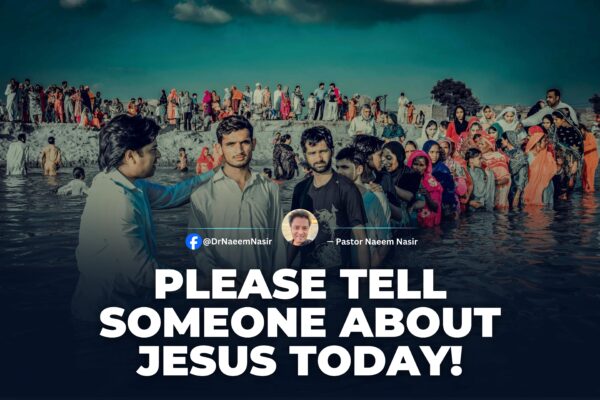
Over the centuries the light flickered and returned. In 1579 the Mughal emperor Akbar invited Christian scholars to his court at Lahore. In the 1800s missionaries settled in Sialkot, Lahore, Peshawar and Karachi, and something happened that no one had planned. The gospel spread like fire among the poorest people of Punjab, the landless labourers at the bottom of the village order, the families everyone else looked down on. Within two generations hundreds of thousands had been baptised. Most Pakistani Christians today are the children of that movement. Our ancestors were not converted by power or money. They were the people nobody wanted, and Jesus wanted them.
Those same decades gave the land some of its finest institutions: Forman Christian College in Lahore, Gordon College in Rawalpindi, Kinnaird College for women, the mission hospitals at Taxila and Sialkot, and hundreds of Christian schools that educated the people who would later lead the new country. When Pakistan was born in 1947, Christians voted for it, served in its army, taught in its classrooms and nursed in its wards.
The church today
Official counts put Christians at around three million, roughly one in every seventy Pakistanis. Church leaders believe the true number is higher. We are the largest religious minority in the country, concentrated in Punjab, with strong communities in Karachi, Sindh and Khyber Pakhtunkhwa.
And we are not one small church. There are thousands of congregations of every denomination: the Church of Pakistan, the Presbyterians, the Catholic dioceses, the Salvation Army, the Full Gospel Assemblies, Pentecostal and independent churches in every town. There are Christian schools from the mountains of the north to the coast of Karachi, Christian hospitals, Bible colleges, orphanages, relief organisations, literature societies, and radio and online ministries reaching people in Urdu, Punjabi, Sindhi and Pashto. Men and women of God lead most of them on salaries that would shock a Western reader, if they are paid at all.
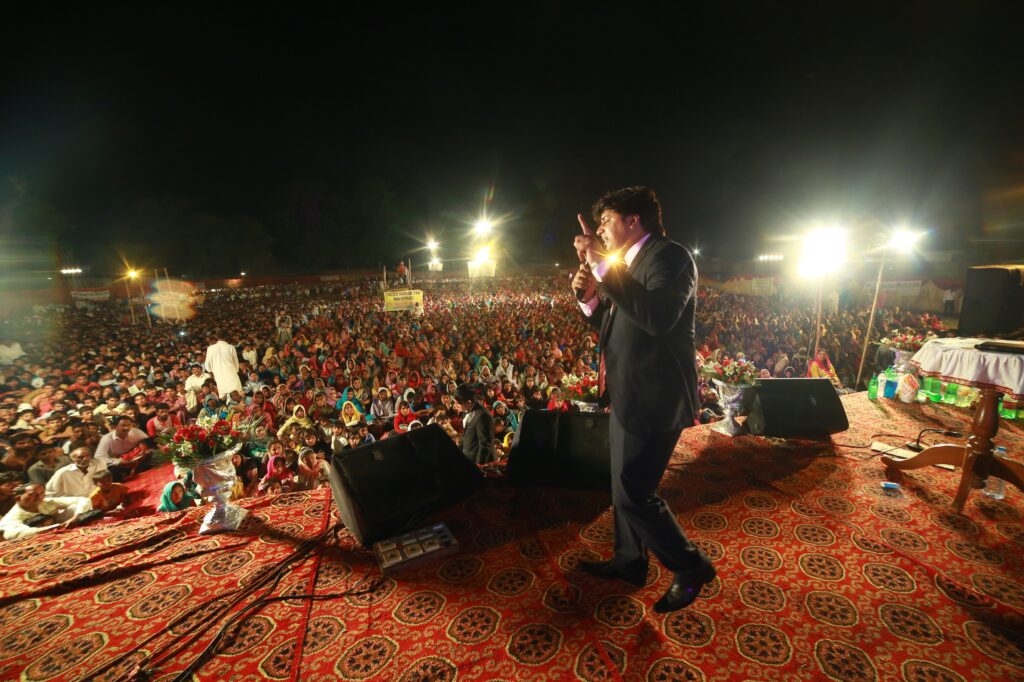
Something else is happening that the news never reports. The church is growing. Village congregations that met under a tree ten years ago now meet in a building they built themselves. Young people are filling Bible colleges. Night prayer meetings go on until dawn. Healing crusades draw crowds of thousands. Worship songs written in Lahore are sung across the country within weeks. There is a genuine revival moving through the poorest Christian communities of Pakistan, and it is not being led by foreigners. It is being led by Pakistanis.
The cost of following Jesus here
Now the hard part, because honesty is owed to the people who live it.
Christians in Pakistan are, for the most part, poor. Many families still do the jobs their grandparents were pushed into: sweeping streets, cleaning drains, labouring at brick kilns, working as domestic servants. Government sanitation jobs are sometimes advertised as being for Christians only. Children are seated at the back of classrooms. Young women are vulnerable in ways their neighbours’ daughters are not. A Christian applying for a job knows that his name alone may close the door.
Then there are the words. Christians are called chura, an old caste insult that means sweeper, filth, untouchable. They are called infidels. The insult is heard in the street, in the school, in the office, and sometimes from the pulpit of another faith. A child learns before the age of ten that in the eyes of some of his countrymen he is less than human.
And then there is the violence. In 2009 in Gojra, eight Christians were burned alive and dozens of homes were torched after a false accusation. In 2013 a mob set fire to more than a hundred and seventy Christian homes in Joseph Colony, Lahore, while the families fled. That same year two suicide bombers walked into All Saints Church in Peshawar at the end of Sunday worship and killed more than a hundred people, most of them women and children. In 2015 two churches in Youhanabad, Lahore, were attacked during services. In 2017 Bethel Memorial Church in Quetta was attacked at a pre-Christmas service. In August 2023 in Jaranwala, mobs burned more than twenty churches and ransacked scores of Christian homes in a single day over an accusation that was never proven. Behind each headline there are families who buried their dead and went back to the same street to live among the same neighbours.
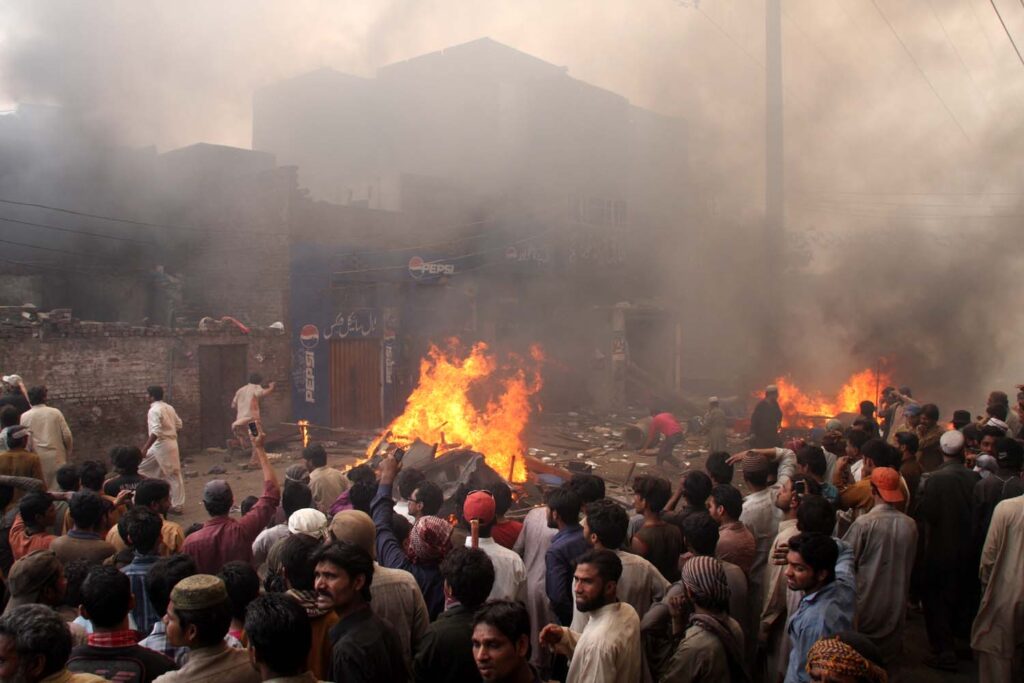
This is the daily reality: not always fire, but always the knowledge that fire is possible.
Why we have not given up
So why do Pakistani Christians still fill their churches on Sunday? Why do they still name their sons Emmanuel and their daughters Grace?
Because we know who we are. The world may call us chura. Scripture calls us something else. “The Spirit himself testifies with our spirit that we are God’s children. Now if we are children, then we are heirs, heirs of God and co-heirs with Christ, if indeed we share in his sufferings in order that we may also share in his glory.” (Romans 8:16-17) “You are all children of God through faith in Christ Jesus.” (Galatians 3:26) No insult, no law and no mob can revoke an identity that God himself has signed.
And because we have read the end of the book. Jesus said, “I will build my church, and the gates of hell will not overcome it.” (Matthew 16:18) He did not say it would be comfortable. He said it would be built. The church in Pakistan is proof that he keeps his word in the hardest ground on earth. “We are hard pressed on every side, but not crushed; perplexed, but not in despair; persecuted, but not abandoned; struck down, but not destroyed.” (2 Corinthians 4:8-9) That verse could have been written in Punjabi.
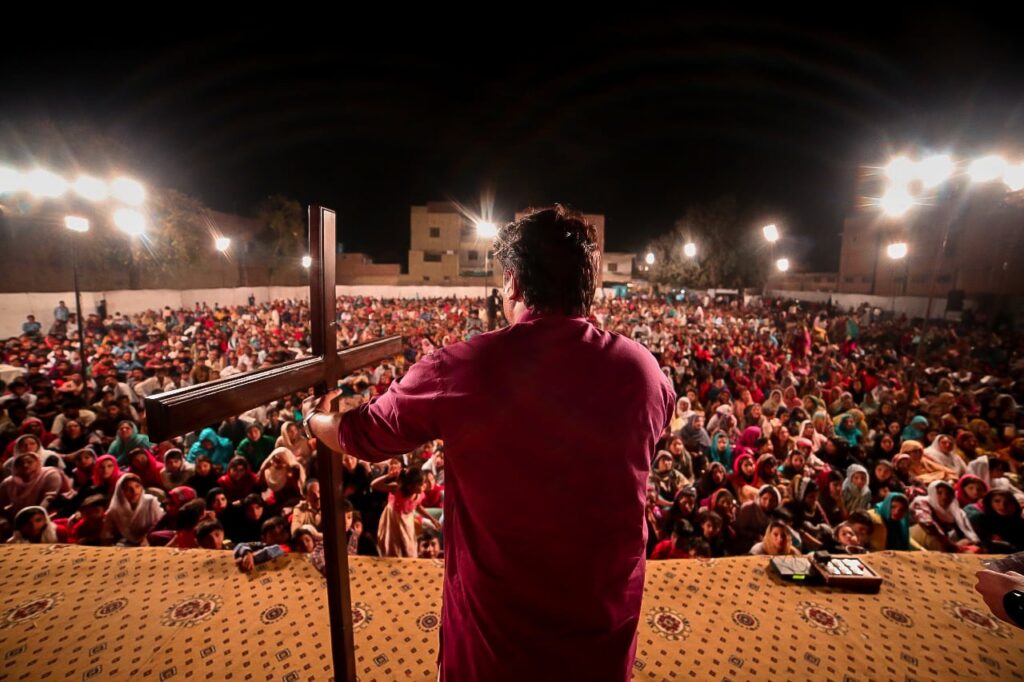
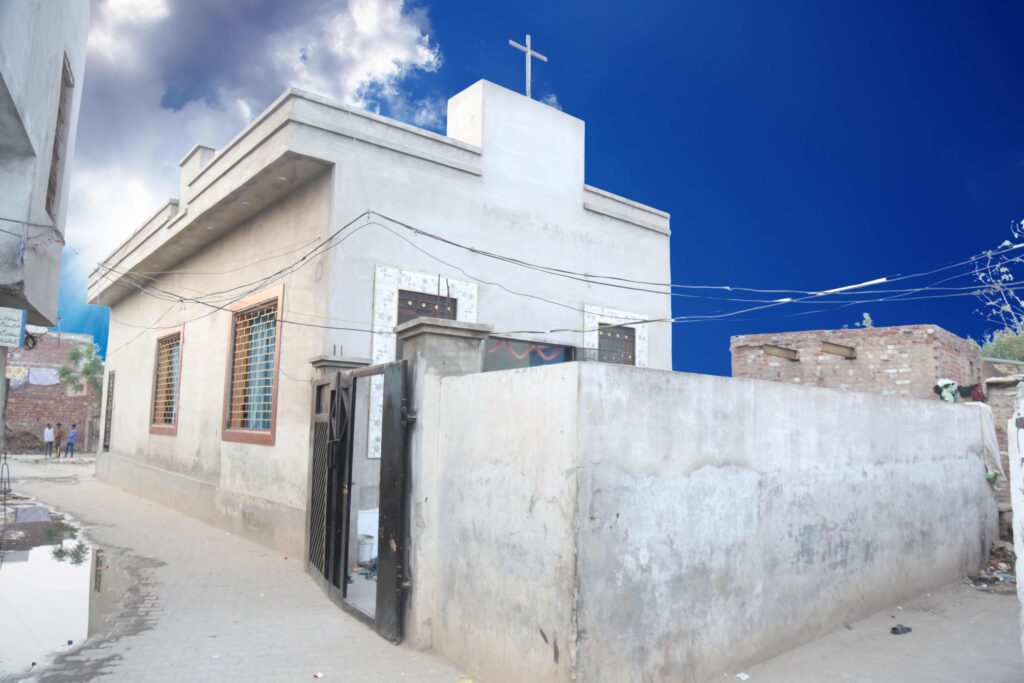
Seventeen years of Good Samaritan Ministries
Good Samaritan Ministries was born in Lahore in 2009 out of one conviction: the gospel must reach every village in Pakistan, and the poorest Christians must not be left to face life alone. Seventeen years later, by the grace of God and the faithfulness of a team of pastors, evangelists, teachers and volunteers across Pakistan, this is some of what the Lord has done:
- Churches planted in villages and towns across Punjab where there was no congregation before, with a headquarters church in Lahore and branch churches that feed, train and send out new workers.
- More than 150,000 Urdu Bibles placed in the hands of pastors, families, new believers and children across more than fifty districts, free of charge, with the vision of one million Bibles by 2033. www.FreeUrduBibles.com
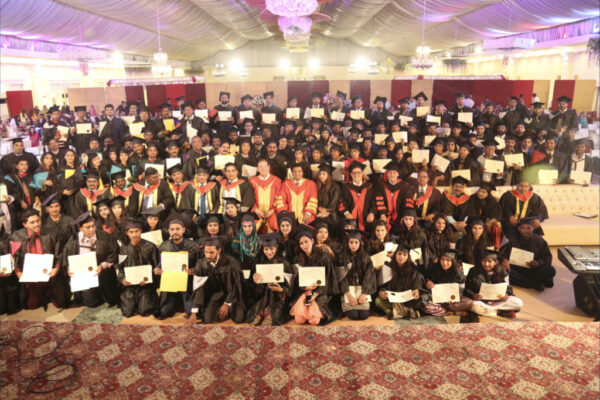
- Tuition-free Christian schools where more than five hundred children from underprivileged families have received an education since 2021, children who would otherwise have followed their parents into the kilns. www.MCHS.edu.pk
- Families freed from bonded labour at the brick kilns, their debts paid, their children enrolled in school, and a new start given to people who had been born into slavery.
- Revelation Bible College and Seminary, a free Bible college that trains pastors and evangelists from certificate level to doctoral studies, so that the next generation of Pakistani church leaders is equipped and not merely willing. www.revelationbiblecollege.com
- The Urdu Church app, a free app that puts the Urdu Bible, daily devotions, worship, Bible quizzes, education and a living church community into the pocket of every Urdu speaker with a phone, inside Pakistan and around the world. www.urduchurch.com.pk
- Food relief for widows and families in crisis, support for believers who have lost everything in attacks, sewing schools for women, and evangelistic crusades that carry the gospel to towns that have never heard it preached.
None of this was done from a position of strength. It was done by ordinary Pakistani Christians who decided that being called chura was not a reason to stop, but a reason to show the country what the children of God look like.
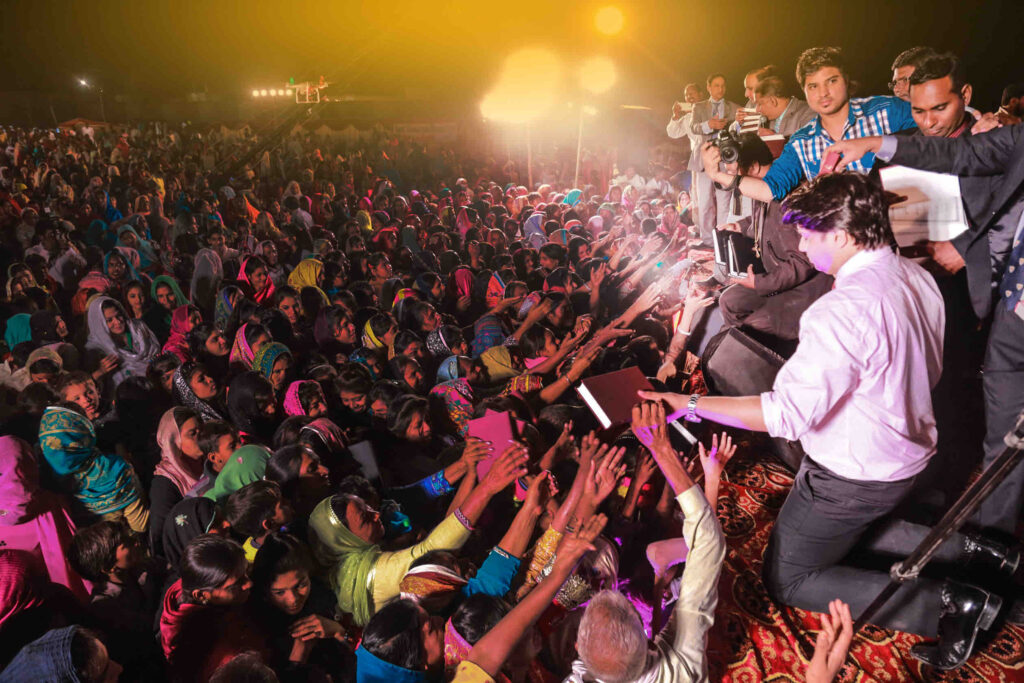

Support this work of God in Pakistan
The church in Pakistan is alive, growing and under pressure all at once, and the workers are few. Good Samaritan Ministries needs your prayers first of all: for protection over pastors and families, for the children in our schools, for the families walking out of the kilns, and for open doors in villages that have never had a church. And we need your partnership, so that Bibles keep going out, teachers keep being paid, the next family is freed and the next church is planted. Every Bible, every school desk and every freed family is a seed in soil that has been watered with the blood of the saints. Please stand with us. www.gsministries.org
Partner with Good Samaritan Ministries
Seventeen years of planting churches, placing free Urdu Bibles in homes, educating children, freeing families from the brick kilns and training pastors at Revelation Bible College. Every gift goes to the field in Pakistan: a Bible, a school desk, a freed family, a new church.